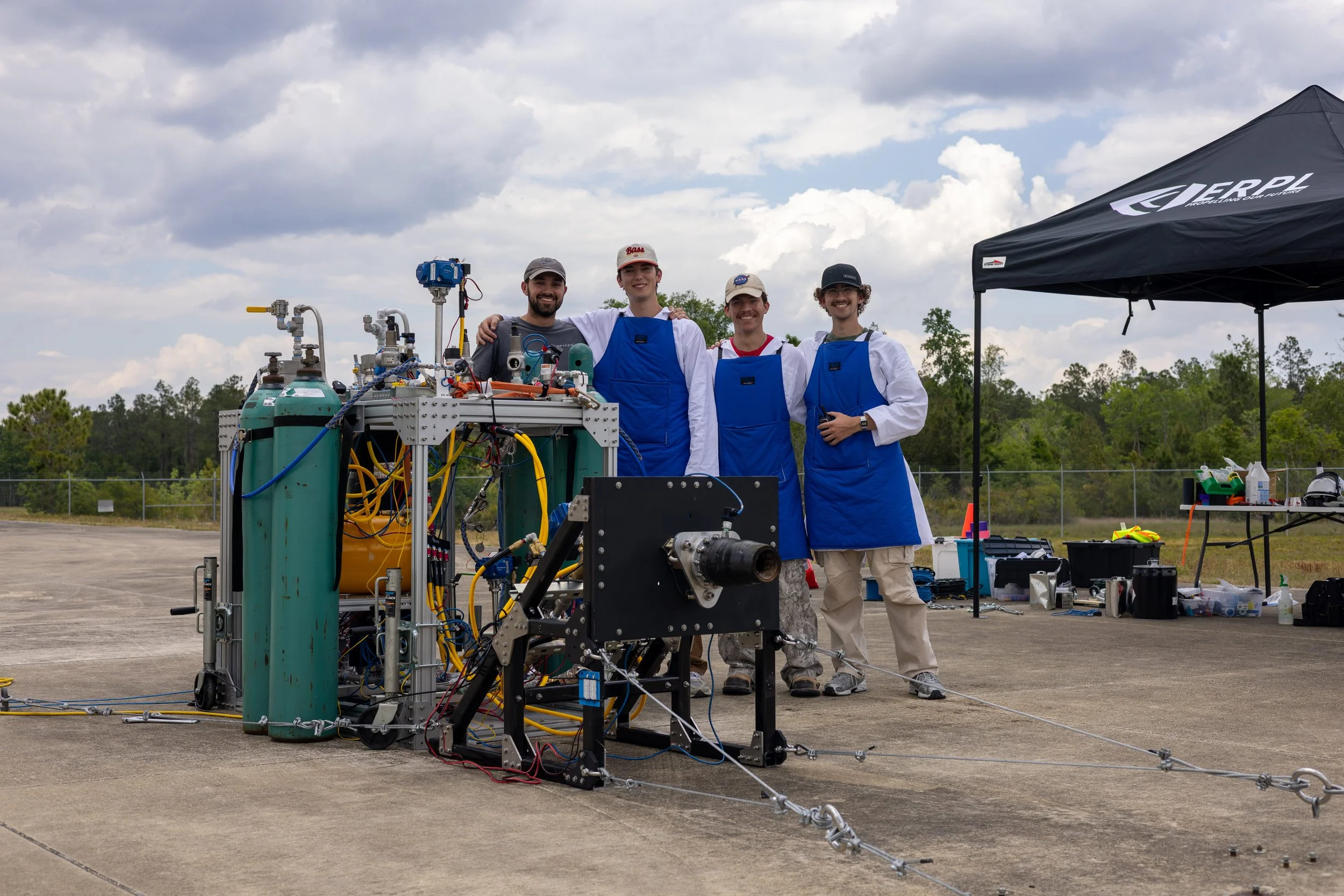
DRACO - Liquid Bi-Propellant Feed System
This project began almost 4 years ago with a single propellant feed system for the hybrid engine Odyssey and over time has been developed into a bi-propellant system with cryogenic oxidiser capabilities.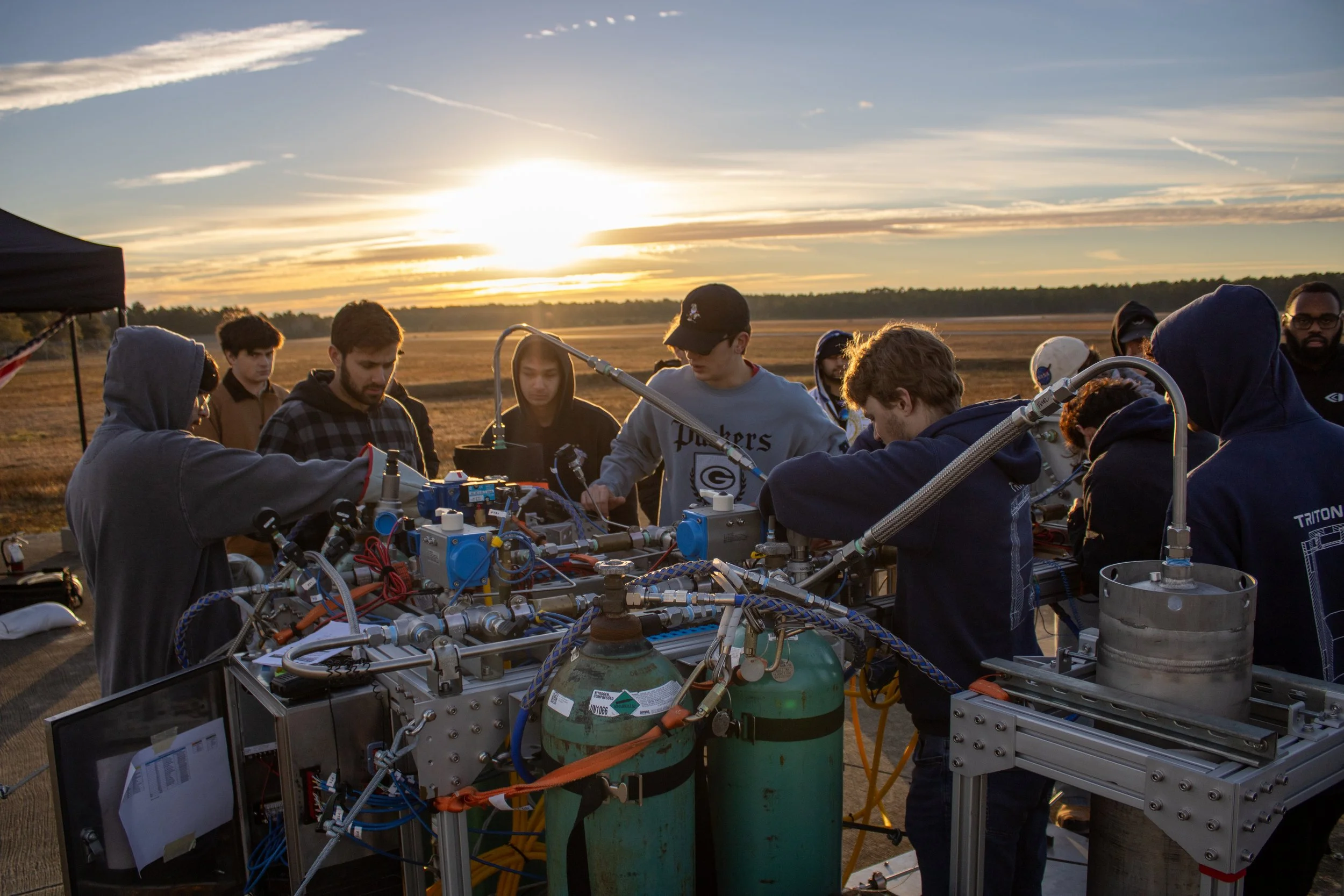
My experience with the system
When I joined ERPL, DRACO had been designed but not yet built so my first introduction was helping assemble the system and also assist with setup for operations. During this time I developed a deep understanding of the design choices made as well as how the system all worked together not only through the system itself but also by attending all water flows, cryo proofs and hot fires which allowed me to understand the operational side of running a feed system effectively and safely.
As I continued to work on the system and gain more confidence with my knowledge I was given the opportunity to join 'Red team' in my second semester with the club, a group I would go on to lead later down the line. This team handles all stand-side operations which range from valve actuation confirmation and leak checks to final propellant load and final set pressures, many of which occurred whilst the system was pressurised using 6k psi gaseous nitrogen. Whilst I had to have a great deal of knowledge to be placed on this team I also learnt so much through working with the system in these energised states one of which was to be paranoid but not fearful. These systems are inherently dangerous and at the end of the day they are designed by students so being wary of different failure modes is essential to be able to notice small changes or inconsistencies, however it is imperative that whilst you must be hyper aware of what's going on, there is a need to stay calm in case something does arise and properly communicate the issues.
After all this time we now have our own bi-propellant system which I have contributed to significantly during my tenure in this club. One of my key tasks with our new system was to calibrate our venturi flow meters to ensure we had a reliable baseline for gathering mass flow rates other than our load cells which were extremely noisy and inaccurate. This task exposed me to ASME MFC-3M for the design and implementation of venturi flow meters which I used to ensure correct installment onto the system and to help guide a group of new students when they began the design of our current system. To calibrate the venturis I first ensured the correct fittings were used to provide an adequate sealing surface which happened to be boss fittings and also determined the correct torque spec. At the same time, I used ASME MFC-3M to determine the correct upstream and downstream lengths required to ensure maximum accuracy which I then coupled with a needle valve to adjust the mass flow through the venturi's allowing for the creation of a calibration curve of the various pressures and mass flows. These all lead to an average discharge coefficient (Cd) of 0.986, verifying that our venturis were designed and manufactured properly and were ready for use.
When we suffered our first hard start, the decision was made that it would be a good idea to make big changes to our feed system for simplifying operations, setup and reducing unnecessary losses. As a new graduate student at this point this task fell to our eager freshman that myself and a couple other older students guided through the process by passing down our knowledge and critiquing their designs through PDR and CDR ensuring that nothing was missed in terms of data collection, operational needs and most importantly safety. Whilst I wasn't involved with the physical design, the rebuild solidified my understanding of the inner workings of our system through the need to teach the younger members about how the system worked and by finding gaps in their designs that they had not picked up on. Simple examples included their placement of the fuel fill valve that actually filled the section upstream of the tanks as well as their LOX dump and vents which pointed directly towards red team and the GN2 bottles. Building on from my lessons learned with the venturis I was also able to help them shorten the system by showing them the correct specifications for the required upstream lengths.